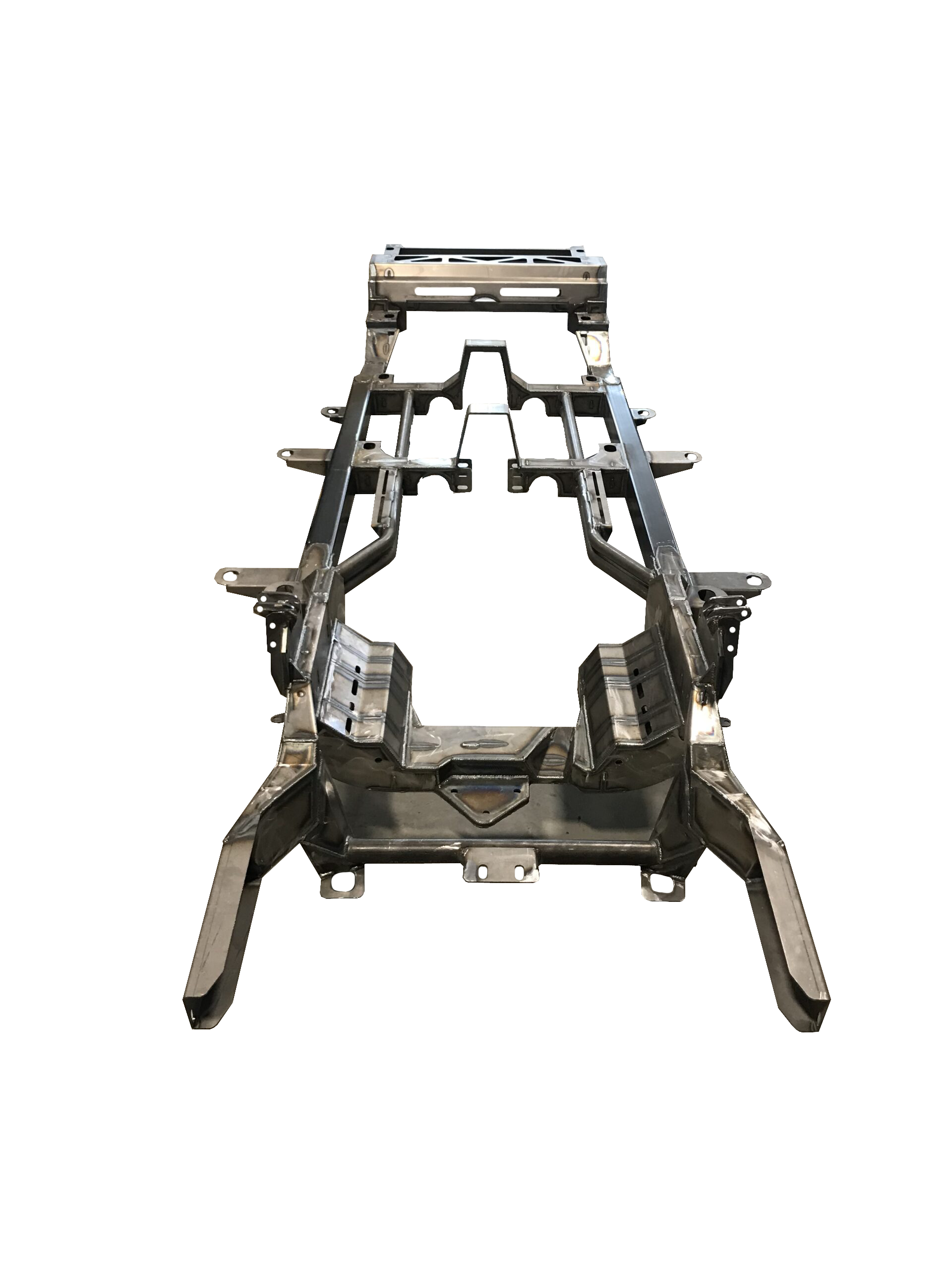
Built from the ground up.
Custom chassis, suspension, steering, brake, and ride-height upgrades engineered to make classic trucks and custom vehicles drive with confidence.
Power gets attention. Chassis and suspension determine how the vehicle actually feels.
A great build should track straight, steer predictably, absorb rough roads, stop with confidence, and remain composed at highway speed. At Ekins Garage, chassis and suspension upgrades are planned as one complete system so ride height, alignment, steering geometry, braking, wheel fitment, and driveline angles all work together.
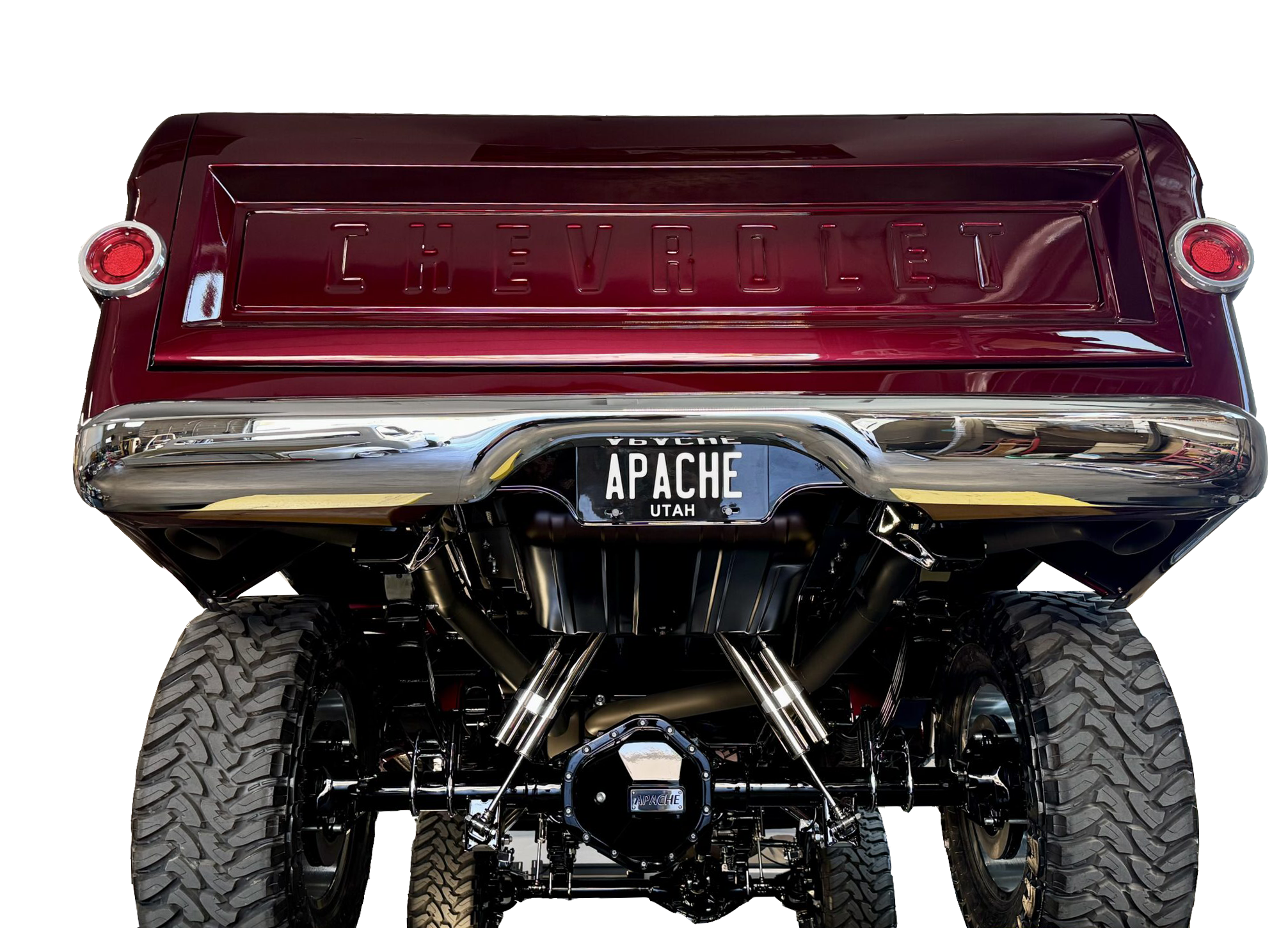
The stance you want. The geometry you need.
Lowering or lifting a vehicle is only one part of the job. A complete chassis and suspension build considers frame strength, control-arm geometry, steering angles, spring rates, shock travel, wheel clearance, brake balance, driveshaft angles, and the way the vehicle will actually be driven.
Custom Chassis & Frame Work
Custom frames, boxed rails, crossmembers, reinforcements, body mounts, engine and transmission mounts, suspension pickup points, and structural modifications built around the complete vehicle.
Independent Front Suspension
IFS conversions, tubular control arms, rack-and-pinion steering, upgraded spindles, sway bars, coilovers, alignment geometry, and front-end packages designed for modern road manners.
Four-Link Rear Suspension
Parallel and triangulated four-link systems, adjustable link geometry, Panhard bars, Watts links, coilovers, axle positioning, and clearance planning for a stable, controlled rear suspension.
Coilovers & Air Suspension
Coilover and air-ride systems selected around vehicle weight, intended ride height, suspension travel, spring rate, shock valving, packaging, and the balance between comfort and performance.
Steering & Brake Upgrades
Power steering conversions, steering columns, rack systems, steering linkage, disc brake conversions, master cylinders, boosters, proportioning valves, and pedal systems integrated into the chassis.
Lifted Truck Suspension
Lifted truck setups planned around suspension travel, steering geometry, shocks, tire clearance, brake lines, driveshaft angles, gearing, stability, and the intended balance of street and off-road use.
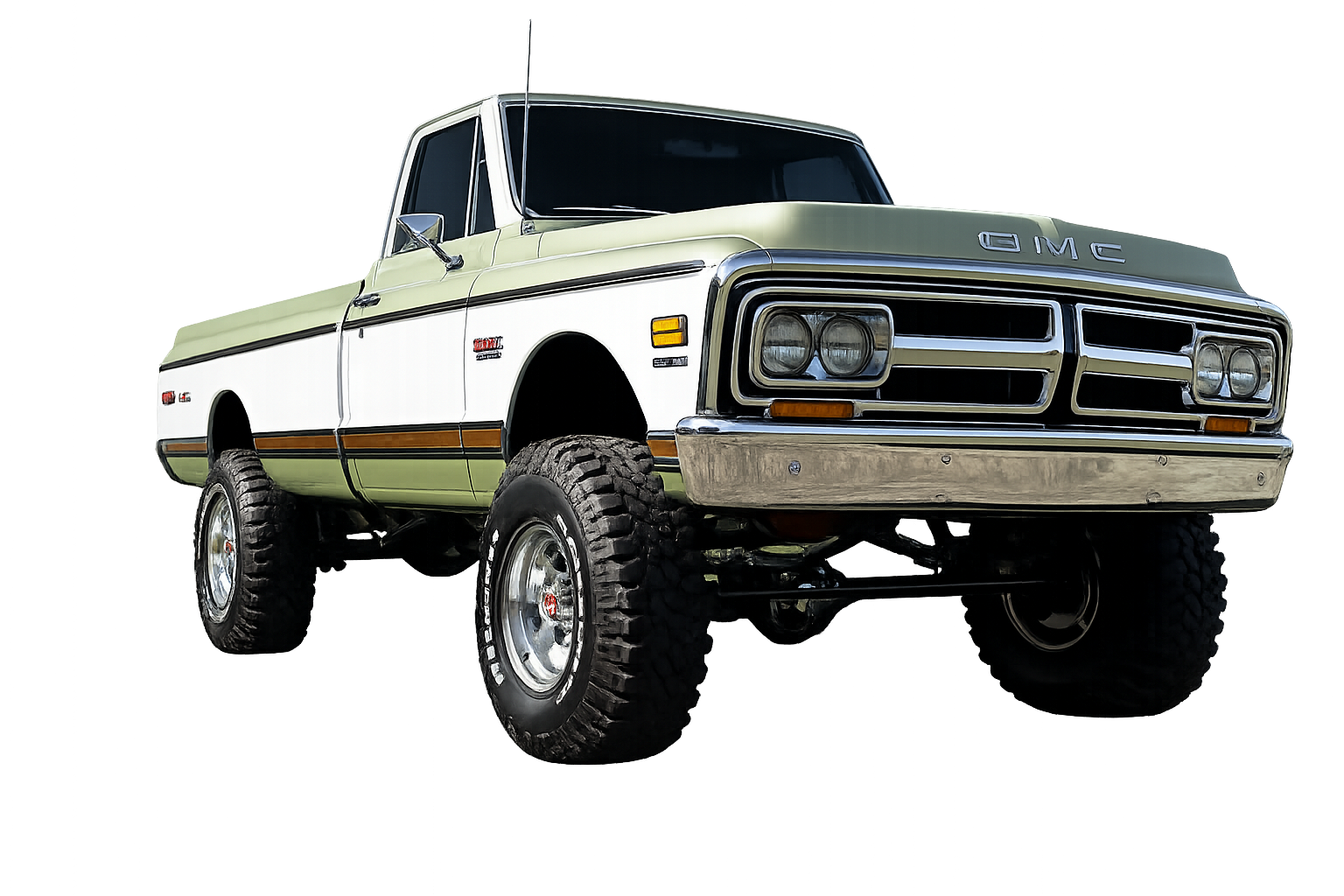
A better stance should also create a better driving experience.
Changing ride height affects more than appearance. It can alter steering response, suspension travel, alignment, tire clearance, bump steer, driveline angles, braking behavior, and overall stability.
That is why we do not treat a lowering kit, lift kit, four-link, or IFS conversion as an isolated bolt-on. Every major component is evaluated against the frame, steering, brakes, wheels, tires, drivetrain, and intended use of the vehicle.
The goal is a classic truck or custom vehicle that sits right, tracks straight, handles predictably, clears what it needs to clear, and feels intentional every time you drive it.
Measured carefully. Built to work together.
A successful chassis and suspension build begins with the vehicle's intended use. Street cruising, long-distance driving, towing, show use, off-road use, and performance driving each create different requirements.
Vehicle Evaluation
We inspect the frame, suspension, steering, brakes, wheel and tire fitment, ride height, driveline angles, current condition, and available space.
Goal Setting
We discuss stance, ride quality, handling, intended use, wheel size, tire size, braking expectations, budget, and long-term plans for the vehicle.
System Design
Chassis structure, suspension geometry, spring rates, shocks, steering, brakes, wheel travel, clearances, and driveline compatibility are planned as one package.
Fabrication & Installation
Components are fitted and installed with attention to strength, symmetry, weld quality, service access, hose routing, fastener access, and long-term durability.
Alignment & Setup
Ride height, corner balance where applicable, alignment, steering stops, shock settings, brake balance, tire clearance, and driveline angles are checked and adjusted.
Road Testing & Refinement
The vehicle is driven, inspected, adjusted, and reviewed under real conditions to confirm tracking, steering feel, braking, ride quality, clearance, and overall stability.
Strong foundation. Confident road manners.
The best chassis and suspension upgrades improve the way the vehicle looks, feels, handles, and lasts.
Build for Real Use
Ride quality, steering feel, stability, suspension travel, braking, clearance, and serviceability matter just as much as stance.
Respect the Geometry
Control-arm angles, steering linkage, roll center, shock travel, spring rate, axle position, and driveline angles must work together.
Finish the Details
Brackets, welds, fasteners, brake lines, hoses, bump stops, clearances, alignment, and final setup determine whether the build truly feels complete.
Questions before changing the way your vehicle sits and drives.
Every chassis is different, but these are some of the most common questions owners ask before beginning a suspension, steering, brake, or ride-height upgrade.
Can Ekins Garage upgrade the suspension on a classic truck?
Yes. We work on classic trucks, muscle cars, hot rods, and custom vehicles. Options may include independent front suspension, four-link rear suspension, coilovers, air suspension, steering upgrades, brake conversions, frame reinforcement, and complete custom chassis work.
What are the benefits of an independent front suspension conversion?
A properly designed IFS conversion can improve steering response, alignment control, braking, ride quality, suspension travel, and highway drivability compared with many original straight-axle or early front suspension systems.
Is a four-link rear suspension better than leaf springs?
A four-link can provide better axle control, adjustability, ride-height flexibility, and packaging for coilovers or air suspension. The best choice depends on the vehicle, intended use, desired ride quality, available space, and budget.
Can you build a lifted classic truck that still drives well?
Yes. A successful lifted truck build requires more than taller springs. Steering angles, shock travel, brake lines, driveshaft angles, tire clearance, gearing, axle position, and overall stability all need to be considered.
Should steering and brakes be upgraded with the suspension?
Often, yes. Suspension, steering, brakes, wheels, tires, and chassis structure all affect one another. Evaluating the complete system helps improve safety, balance, handling, and long-term reliability.
Build the stance you want without sacrificing the way it drives.
Tell us about your vehicle, the ride height you want, the way you plan to use it, and what you want to improve. We will help you build a chassis and suspension package that looks right and works as one complete system.
Discuss Your Project